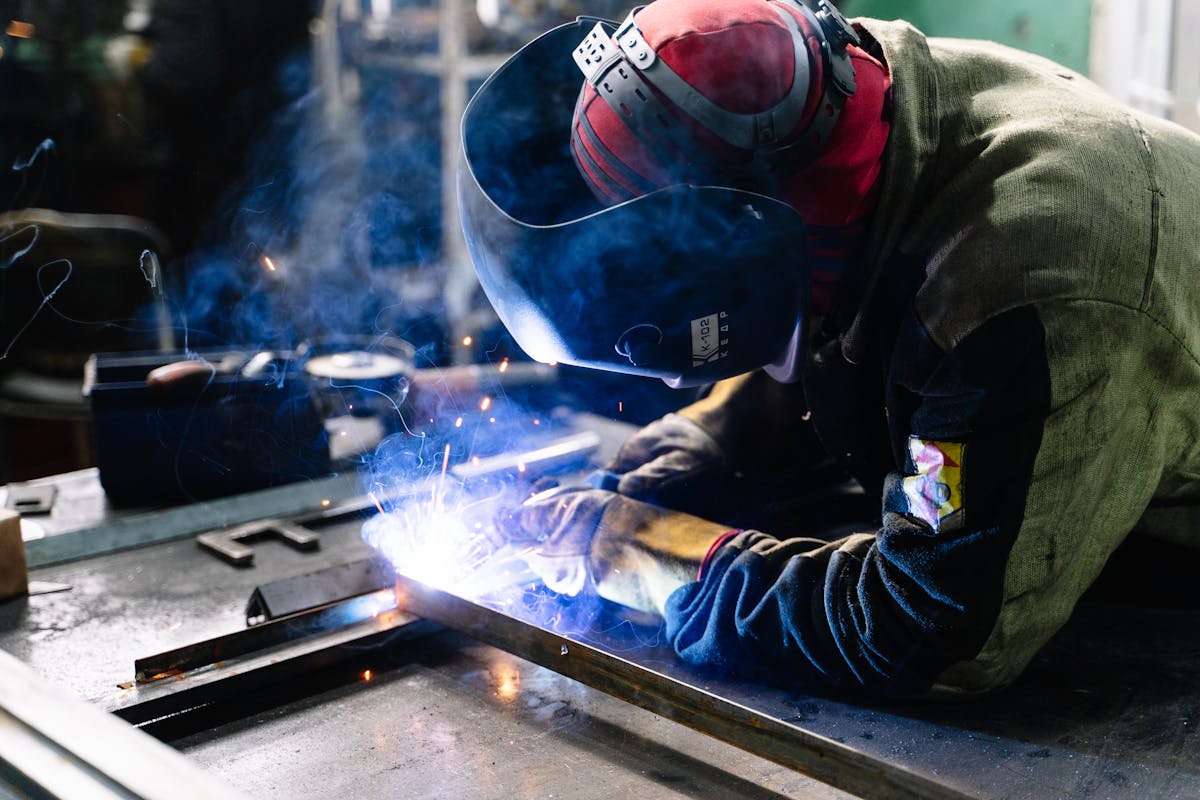
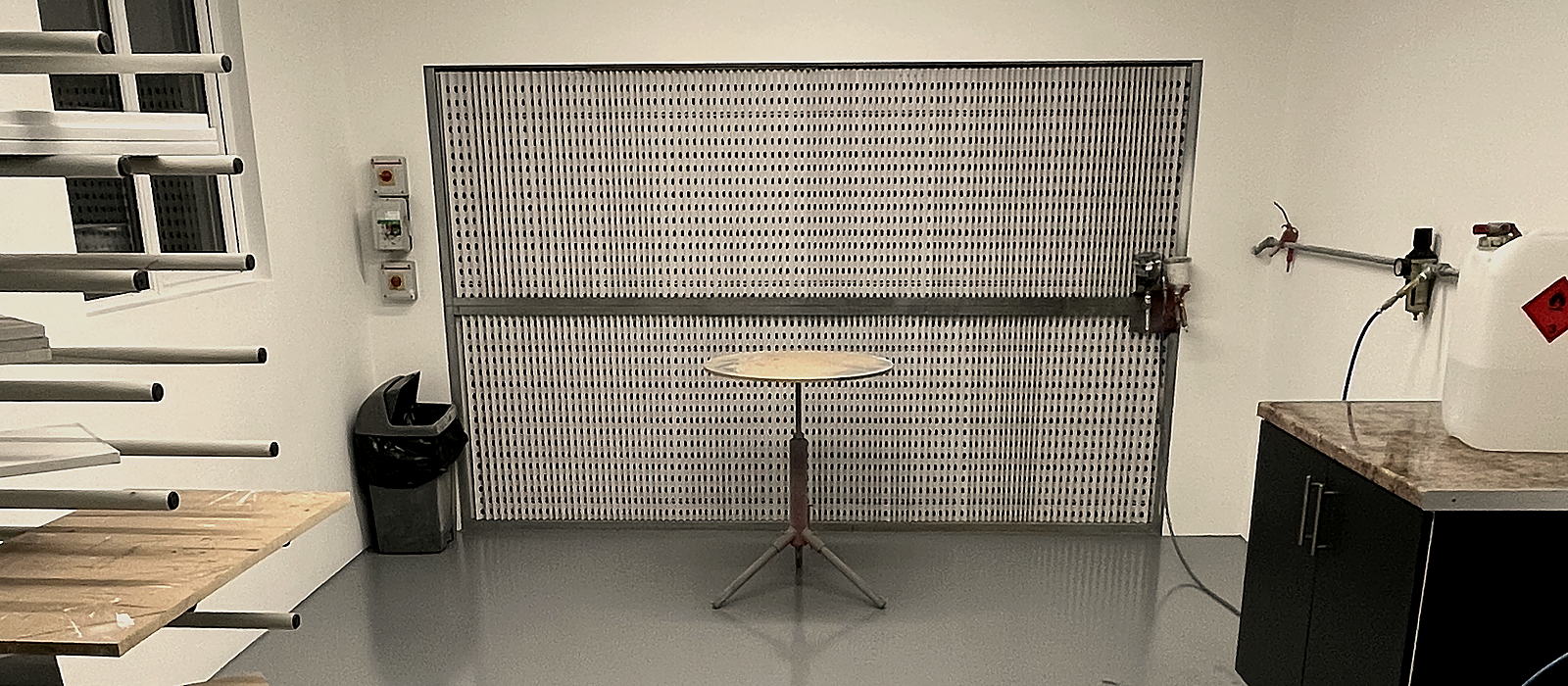

Wood soaks a primer in and holds it. Metal and most plastics do not. A coating on steel, aluminium or plastic is held on by its bond to the very top of the surface, so anything sitting on that surface, from cutting oil to a fingerprint, sits between the coating and the material. That is why preparation decides whether a metal or plastic finish lasts.
Why coatings fail on metal
When we look at a failed metal finish, the cause is usually one of these:
- Oil and grease from fabrication, cutting fluid or handling.
- Mill scale, rust or oxide that was painted over and later let go, taking the coating with it.
- No key. Smooth metal, especially aluminium, gives a coating nothing to grip.
- The wrong primer. A wood primer on metal may look fine at first and then flake.
Step 1: Clean and degrease
Degrease every part with a suitable cleaner before anything else, and change your cloths often so you are removing oil, not spreading it. Once a part is clean, handle it with clean gloves. Fingerprints leave enough oil to cause small adhesion failures or craters in the finish.
Step 2: Remove loose material
On steel, remove rust, loose scale and weld spatter. On aluminium, the surface oxide forms again quickly, so prepare it close to the time you prime. Coating over loose material only fixes the coating to something that will come off.
Step 3: Abrade for a key
Abrade the surface evenly so the primer has something to grip. Pay attention to edges, corners and welds, which are easy to miss and are where coatings often start to fail. Remove the dust, then degrease again lightly before priming.
Step 4: Use a primer made for metal
Prime with a product designed to bond directly to metal. Novalk White Primer Direct to Metal and Clear Primer Direct to Metal are made for steel, aluminium and compatible plastics, and are used with NIC991 catalyst. The clear primer can also be tinted towards the topcoat colour.
Then topcoat with the Novalk metal topcoats, available in matt 10% and satin 30%, in clear or tinted white. Stay in the metal system from primer to topcoat.
Plastics: test before you commit
Plastics vary more than metals. Some take a coating well after light abrasion. Others, often the ones that feel slightly waxy, are very difficult to coat without specialist pretreatment.
- Clean off release agents. Moulded parts often carry mould release from production, which stops coatings bonding.
- Abrade lightly with a fine abrasive or scuff pad.
- Test adhesion first. Prime and topcoat a sample, let it cure fully, then cross-score the film and check that it does not lift with tape. Do this before quoting a production run.
If you do not know what the plastic is, ask the supplier of the part. It makes a big difference to whether the job is possible.
Galvanised steel: call first
Galvanised steel is one of the most common causes of adhesion failure on metal. It needs specific preparation, and the right approach depends on how and when it was galvanised. Call the counter with the details before you coat it.
Colour for fabricators
We tint the Novalk metal topcoats in Tullamore, including RAL colours, and keep the formula on file for repeat orders. A 5 litre and a 1 litre tin tinted to the same colour may differ slightly, so order the job in one pack size where you can. Our guide to colour matching that still matches on the second batch explains how to keep repeat orders consistent. For timber and MDF parts on the same project, see acid-cured vs pre-catalysed vs PU lacquer.
If you supply gates, railings, shopfitting frames or architectural metalwork, see how we work with metal fabricators, or build a quote with the substrate, colour and sheen.