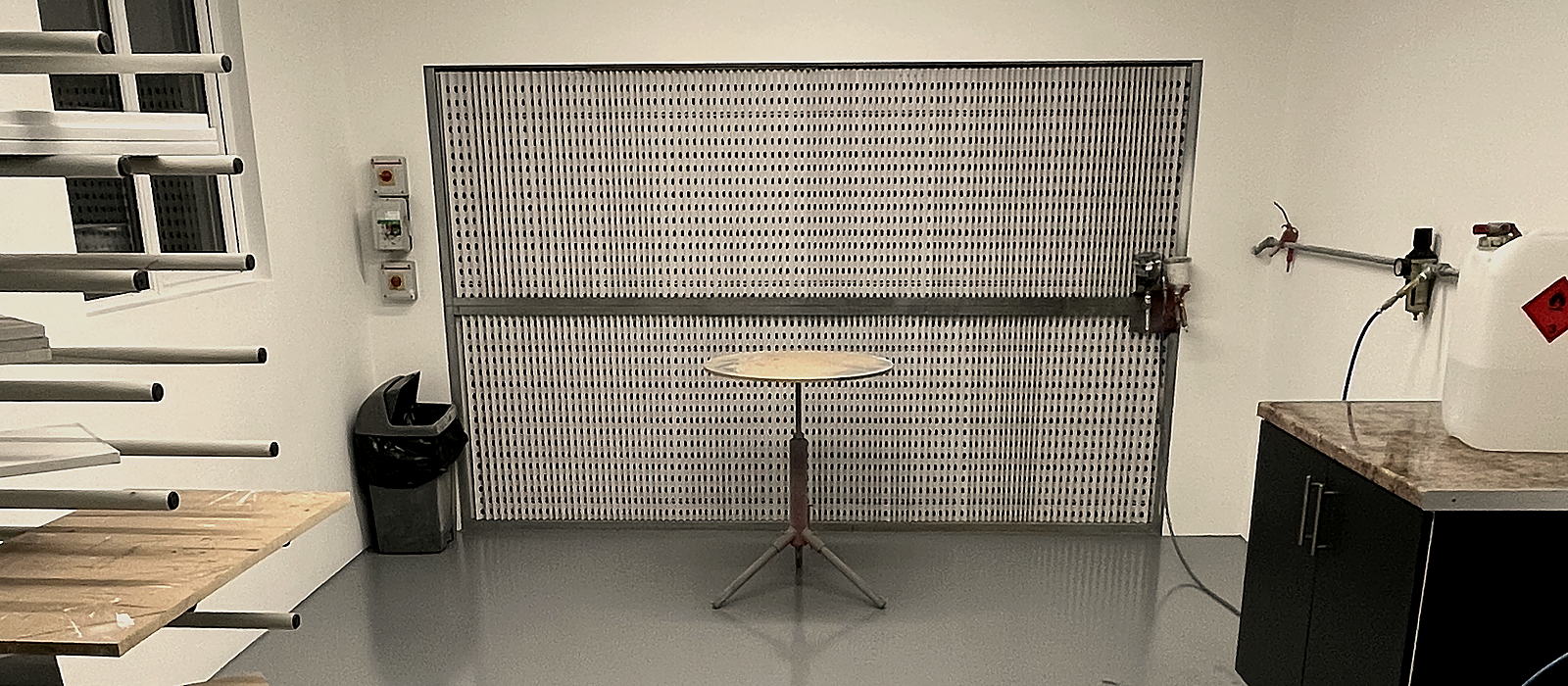
Lacquer data sheets give two thinning figures for a reason. Novalk’s PC clear topcoat sheet, for example, says 20–30% ND4100 for a gravity gun and 10–20% for a pump gun. The gun changes how the lacquer has to be prepared, how fast it goes on and what the finish looks like. Choosing the right one for the work is as important as choosing the right lacquer.
The three main options
- HVLP gravity gun. A cup on top of the gun feeds lacquer by gravity, and high-volume, low-pressure air atomises it. Fine finish, low overspray, quick to clean.
- Airmix (air-assisted airless). A pump pushes lacquer to the gun at moderate pressure through a small tip, and a little air at the cap finishes the atomisation. Fast, fine finish, low overspray.
- Airless. Very high fluid pressure atomises the lacquer through the tip with no air at all. Very fast, high output, a coarser finish and more bounce-back.
HVLP gravity: samples, colours and small runs
A gravity HVLP is the gun most furniture and joinery shops start with, and it stays useful even in shops with a pump.
Where it works well:
- Sample doors, spray-outs and colour approvals.
- Small runs and one-off pieces.
- Frequent colour changes, because the cup and gun clean quickly.
- Touch-ups and repairs.
What to watch: gravity guns need the higher thinning figure on the data sheet, which means a little less film per coat. Keep to the stated range rather than thinning further to make a thick product flow.
Airmix: production kitchens and furniture
Airmix is the standard in many production spray shops. The pump keeps a steady supply to the gun, so you can spray a full rack of doors without refilling, and the air-assisted cap gives a finish close to HVLP with less overspray than airless.
Where it works well:
- Kitchen door and carcass production.
- Long runs in one colour and sheen.
- Primers and sealers that need good film build per coat.
What to watch: use the pump thinning figure, which is lower than the gravity figure, and filter the lacquer before it goes into the pump. Pumps and lines hold more material, so colour changes take longer and need a proper flush.
Airless: big areas, not fine furniture
Airless rigs move a lot of material quickly. They suit large flat areas, site work and some primers, but the high pressure and coarser atomisation make them a poor fit for fine furniture finishes and high-sheen topcoats. Most spray shops finishing kitchens and furniture use airmix rather than straight airless.
Settings that matter more than the gun
Whichever system you use, these make the biggest difference to the finish:
- Viscosity. Measure it with a viscosity cup. If the data sheet gives a range, time it rather than judging by eye.
- Pressure. Use the lowest pressure that atomises the lacquer cleanly. Too much pressure creates dry spray and overspray, especially in a warm booth. See spraying lacquer in hot weather.
- Tip or nozzle size. Match it to the material and the gun maker’s guidance. Primers and heavy-bodied products often need a larger tip than clear topcoats.
- Distance and overlap. Keep the gun square to the surface at a steady distance, and overlap each pass by about half.
Keep solvent and waterborne apart
Waterborne lacquer is unforgiving of solvent residue. Keep dedicated guns, cups, pumps and lines for waterborne where you can. Clean waterborne kit with waterbase gun wash and solvent kit with solvent gun wash. A gun cleaned in the wrong wash is one of the most common causes of fisheyes. More on this in moving a solvent line across to waterborne.
Clean the gun like it matters
A catalysed lacquer left in a gun or line will cure there. Clean straight after use, strip and clean the air cap and fluid tip, and replace worn seals and filters before they cause spitting. A good lacquer through a dirty gun is still a bad door.
Talk to the counter
We stock DeVilbiss and Fastmover spray equipment, filters, viscosity cups and gun wash alongside the coatings, so they can come on the same order. Tell us what you spray, how much and how often, and we will help you choose. Browse spray equipment or build a quote with the lacquer and the kit together.